

Coping with Childhood Cancer
You are a Family Member or Friend
- All
- Family
- Follow up
- Bereavement
Featured Topics
Methods to support the families of the survivors
The analysis of the results from multiple research studies sheds light on the effectiveness and feasibility of psychosocial interventions aimed at supporting families dealing with childhood cancer. The review of psychosocial interventions for families of children with cancer reveals encouraging findings. Various approaches, including Cognitive Behavioral Therapy (CBT), Problem-Solving Skills Training (PSST), and educational-spiritual group sessions, demonstrate positive effects on reducing distress, depression, anxiety, and post-traumatic stress symptoms among parents. These interventions also enhance cancer-related knowledge and improve Quality of Life (QoL) for parents. This underscores the significance of early and comprehensive psychosocial care for families grappling with pediatric cancer, emphasizing the need for personalized approaches to cater to individual needs.
On the other hand, the feasibility study of the FAMOS intervention provides promising insights into its potential effectiveness. The intervention, designed to enhance family cohesion and well-being, shows encouraging results in terms of recruitment, retention, participation, and acceptability. With a participation rate of 62% and high satisfaction among participants, the intervention holds promise in effectively supporting families transitioning from intensive cancer treatment. The high retention rate and adherence to the intervention sessions further underscore its feasibility and acceptability among participants.
Both studies highlight the unique challenges faced by families dealing with childhood cancer and stress the importance of tailored approaches to address these challenges. The FAMOS intervention, with its structured and family-centered approach, aims to improve communication between family members, prevent long-term psychological effects, and strengthen family functioning. Similarly, the review emphasizes the need for integrating technology-based tools and computer-assisted methods to enhance communication and accessibility of support services for families.
However, further research is warranted to fully understand the efficacy and long-term outcomes of psychosocial interventions for families of children with cancer. Completion of a nationwide randomized controlled trial (RCT) for the FAMOS intervention will provide valuable insights into its effectiveness in achieving desired outcomes. Additionally, future studies should address limitations such as the predominance of mothers in psychosocial intervention studies and ensure inclusivity and generalizability of findings.
In conclusion, the analysis underscores the importance of psychosocial interventions in supporting families facing childhood cancer and highlights the potential of structured and family-centered approaches like FAMOS to improve the well-being and quality of life for families navigating the complexities of childhood cancer survivorship.
For more information
https://www.cambridge.org/core/journals/palliative-and-supportive-care/article/review-of-psychosocial-interventions-targeting-families-of-children-with-cancer/E9850222B14DEEBE9285C218BDDCCC13
https://www.tandfonline.com/doi/full/10.1080/0284186X.2016.1269194
https://academic.oup.com/jpepsy/article/35/10/1116/867011#14999761
https://www.cancer.org/cancer/survivorship/children-with-cancer/after-diagnosis/for-parents.html
https://www.cancerresearchuk.org/about-cancer/coping/family-friends-caregivers/taking-care-of-yourself
https://www.cancerresearchuk.org/about-cancer/coping/family-friends-caregivers/how-support-someone-with-cancer

Effects of Cancer on Siblings and their Relationship
The presence of a subtle but discernible uptick in sibling conflict over the course of the first year following a child's cancer diagnosis was revealed during several studies. This indicates that the stressors associated with pediatric cancer treatment may gradually exacerbate tension between siblings within affected families.
Moreover, recent studies highlighted the significant impact of stress on sibling conflict dynamics. Families experiencing higher average stress levels, particularly related to general life stressors, cancer-specific stress, and financial stress, were more likely to report elevated levels of sibling conflict by the conclusion of the first year. This suggests that the overall stress burden faced by families plays a crucial role in shaping the intensity of sibling conflict amidst the challenges of pediatric cancer treatment.
Interestingly, the research found that monthly fluctuations in stress levels did not significantly influence sibling conflict within families. This implies that while stress may have a cumulative effect on sibling dynamics over time, short-term variations in stress levels may not have a direct impact on conflict patterns between siblings.
Furthermore, stressors specifically related to treatment intensity and perceived life threat were not found to have significant associations with levels of sibling conflict. This suggests that certain aspects of the cancer treatment experience may not directly contribute to heightened sibling conflict within families.
In conclusion, the study underscores the complex interplay between stress and sibling conflict within families navigating pediatric cancer treatment. It emphasizes the importance of considering the overall stress landscape faced by families in understanding conflict trajectories. The findings suggest that interventions aimed at supporting siblings in managing stress and regulating emotions could play a crucial role in mitigating the negative impact of high stress levels on sibling relationship quality during pediatric cancer treatment.
For more information:
https://www.ncbi.nlm.nih.gov/pmc/articles/PMC6053325/
https://www.ncbi.nlm.nih.gov/pmc/articles/PMC6005109/
How children face the death of their siblings
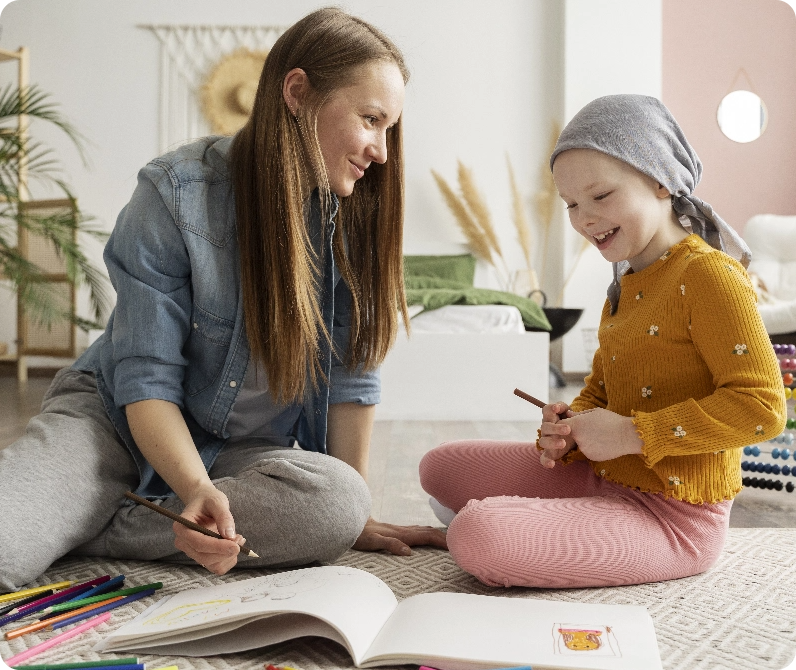
The profound impact experienced by children who grapple with the loss of a sibling, is discussed and elucidated on the nuanced ways in which grief manifests across different age groups through different multiple studies. Amidst the upheaval of mourning, these siblings often find themselves navigating complex emotions and grappling with the weight of profound loss.
Referred to as "silent mourners," these children and teenagers often find themselves overshadowed by the grief of their parents, their own struggles overlooked amidst the broader familial sorrow. Yet, for these siblings, the loss of a brother or sister represents a profound rupture—a void not only in their familial structure but also in their personal realm, as they bid farewell to a cherished friend and confidant.
The trauma of losing a sibling looms large, casting a long shadow over their emotional landscape. For some, the experience is compounded by feelings of "survivor's guilt," a heavy burden borne by those left behind.
Across varying age groups, the study reveals distinct patterns in how children process and respond to loss. For the youngest among them, aged 0-6, the concept of death remains elusive, their innocent search for the departed sibling underscoring their profound confusion. Yet, even as they grapple with their own nascent understanding, these children keenly absorb the grief permeating their family environment.
Conversely, older children aged above 6 navigate a tumultuous sea of emotions, from guilt and anger to anxiety and shame. Bereft of a comprehensive understanding of grief, they may unwittingly reject the support offered, grappling with the weight of their emotions in isolation.
However, amidst the darkness of grief, the study offers glimmers of hope, outlining various strategies for coping with the loss of a sibling. From seeking solace in the shared grief of family members to seeking professional counseling and participating in support groups, children find pathways to navigate their grief. Journaling, scrapbooking, and embracing new hobbies offer creative outlets for processing emotions, while open communication and parental support serve as steadfast pillars of strength.
As time unfurls its relentless march, these resilient young souls gradually adapt to the new reality forged in the wake of loss. Though the pain may linger as a tender ache, they emerge from the crucible of grief, their spirits tempered by resilience, and their hearts imbued with the enduring legacy of love shared with their departed sibling.

Grief and Bereavement - A part of Cancer
Grief intertwines deeply with the journey of cancer and bereavement, casting its shadow over both patients and caretakers alike. In the turbulent landscape of illness and loss, grief emerges as an ever-present companion, its weight felt keenly in the hearts of those navigating the complexities of illness and mourning.
The experience of grief proves uniquely personal, its contours shaped by the individual's psyche and circumstances. From profound sorrow to wrenching despair, grief unfolds in myriad forms—some withdraw into solitude, seeking solace in isolation, while others find release in tears or screams. Anger, sadness, shock, guilt, and detachment swirl like a tempest, enveloping grieving hearts in their tumultuous embrace. Amidst the looming specter of death, anticipatory grief casts its shadow, heightening the emotional tumult as loved ones grapple with the impending loss.
In the aftermath of death, grief rattles the very foundations of life and belief, challenging the tenets of acceptance and understanding. Yet, grief is not a linear journey—it ebbs and flows, its tides unpredictable, its depths unfathomable. There exists no timeline for grief; its duration spans from mere months to agonizing years, and for some, it may linger indefinitely. The persistent ache of loss serves as a constant reminder, a bitter echo of the departed's absence.
In the face of such profound sorrow, the imperative to cope with grief becomes paramount. Drawing upon a tapestry of coping mechanisms, individuals find solace in remembrance—journaling, creating memory books, and sharing stories serve as tributes to the departed, honoring their legacy. Support groups offer sanctuaries for shared sorrow, providing avenues for catharsis amidst the pain. Nourishing the body through healthy habits and embracing moments of joy amidst the sorrow offer glimpses of respite amidst the storm.
As grief threatens to overwhelm, seeking support from medical professionals becomes imperative, safeguarding one's mental well-being in the crucible of loss. In the crucible of grief, time emerges as a balm, its passage offering the promise of healing, however gradual and arduous the journey may be.
Ultimately, grief stands as an indelible testament to the depth of love shared with those departed. Though its pain may linger, its contours may shift, and its burdens may wax and wane, grief bears witness to the enduring legacy of love, woven into the fabric of life's transient tapestry.

A digital platform offering reliable information and resources to support children
Second cancers
Survivors of childhood cancer are at higher risk of developing a second. Survivors of childhood cancer are at higher risk of developing a second.

Fundrasing
Reintegration into school after cancer treatment can be a significant milestone for children. It is a crucial step in their recovery returning
Ewing sarcoma
a cancer that usually arises in the bones or soft tissues around the bones.a cancer that usually arises in the bones or soft tissues around the bones.a cancer that usually arises in the bones or soft tissues around the bones.a cancer that usually arises in the bones or soft tissues around the bones.a cancer that usually arises in the bones or soft tissues around the bones.a cancer that usually arises in the bones or soft tissues around the bones.a cancer that usually arises in the bones or soft tissues around the bones.a cancer that usually arises in the bones or soft tissues around the bones.a cancer that usually arises in the bones or soft tissues around the bones.a cancer that usually arises in the bones or soft tissues around the bones.a cancer that usually arises in the bones or soft tissues around the bones.a cancer that usually arises in the bones or soft tissues around the bones.a cancer that usually arises in the bones or soft tissues around the bones.a cancer that usually arises in the bones or soft tissues around the bones.

Osteosarcoma
a cancer that begins in the bone. that usually arises in the bones or soft tissues…a cancer that begins in the bone. that usually arises in the bones or soft tissues…a cancer that begins in the bone. that usually arises in the bones or soft tissues…a cancer that begins in the bone. that usually arises in the bones or soft tissues…a cancer that begins in the bone. that usually arises in the bones or soft tissues…a cancer that begins in the bone. that usually arises in the bones or soft tissues…a cancer that begins in the bone. that usually arises in the bones or soft tissues…a cancer that begins in the bone. that usually arises in the bones or soft tissues…a cancer that begins in the bone. that usually arises in the bones or soft tissues…
Ways Parents Can Provide Emotional and Practical Support

Be there for your child
Your child needs you now more than ever. Show them that you are there for them and that you care.

Advocate for your child
Be your child’s advocate and work closely with their healthcare team. Make sure your child’s needs are being met and their care.