

Is there a difference between adult and childhood cancer?
Childhood cancers usually occur in organs, because they mimic the dividing (primitive) cells of early foetal development. This rapid cell division means that childhood cancer responds well to treatment. Carcinomas are rare in children as they take many years to develop and are more evident in adults.
The real causes for childhood cancer are unknown. The interaction between environmental factors and host genetics could make one more susceptible to getting cancer. Less than 5% are inherited. Certain inherited genetic syndromes (e.g., Down Syndrome, Fanconi Anaemia, Klinefelter, Li Fraumeni, Wiskott-Aldrich, Beckworth-Wiedemann, etc.) have an increased risk of cancer. Childhood cancer is not infectious nor contagious. Most childhood cancer is due to spontaneous mistakes or mutations in the genetic code of cells which allows the cell to multiply unchecked and out of control of the body.
Read More:
- What is the Difference Between Cancer in Adults and Cancer in Children? https://blog.dana-farber.org/insight/2018/09/difference-cancer adults-cancer-children/
- Childhood Cancer FAQs – How does cancer differ in children and adults? https://massivebio.com/childhood-cancer-faqs/
Related Parent Carers
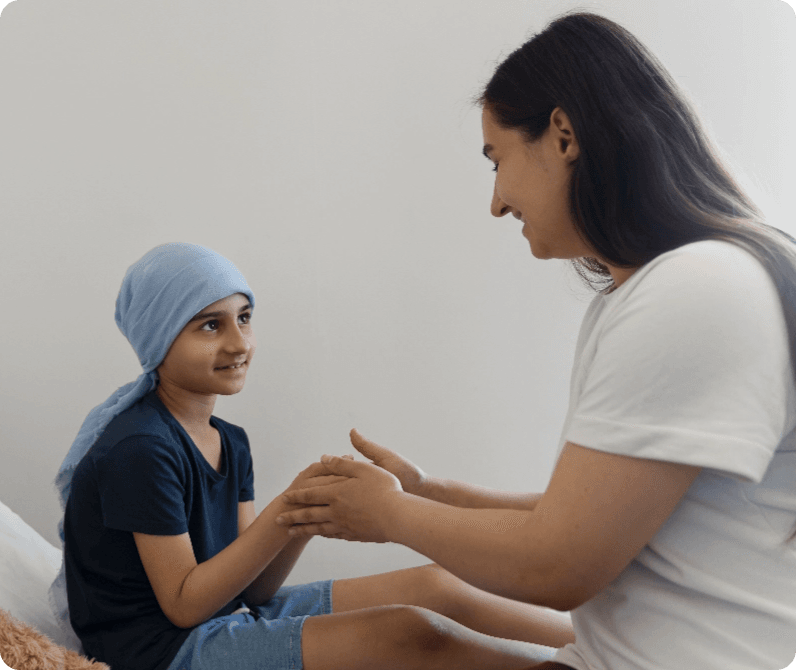
Informational stressors for parents (caregivers) who have a child diagnosed with cancer
A child with cancer will always have a multidisciplinary team, and within that, each discipline (like nurses, doctors, therapists) may function as intra-disciplinary sub-teams to ensure consistency.

Educating your community of family and friends
Sharing a child’s cancer journey with one’s community can raise awareness, build understanding, and gather emotional or practical support. However, it is equally important to do so in a way that protects the child’s privacy and the family’s emotional wellbeing.

Message from parents to parents
Hearing that your child has cancer is one of the most overwhelming experiences a parent can face. It often triggers a series of emotional and psychological reactions, commonly described in phases like the stages of grief, though each parent may experience them differently.